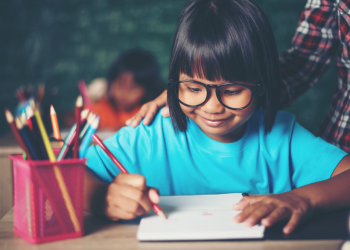
In 2025, girls education in India is witnessing a transformative wave driven largely by technology. While the country has made remarkable progress in increasing girls’ access to schooling, digital tools are now playing a pivotal role in overcoming persistent gaps—especially in rural areas. Technology-enabled education initiatives are creating new opportunities for learning, engagement, and empowerment, helping girls break historical barriers related to gender, geography, and socio-economic status. This article explores how digital learning innovations and focused interventions are reshaping the future of girls education in India, with a spotlight on rural education challenges and solutions shaping 2025.
The Progress and Challenges in Girls Education in India


Recent data from government reports shows significant gains: girls now account for nearly half of school enrolments, with improvements in infrastructure such as toilets, electricity, and sanitation increasing comfort and safety—major factors influencing attendance. The Gross Enrolment Ratio for girls at secondary school has risen to close to 69%, a critical milestone since dropouts historically spike during adolescence. Despite this progress, girls in deeply rural or underserved regions still face obstacles including distance to schools, financial constraints, cultural norms, and occasional lack of female educators—all factors that can interrupt or end their educational journeys.
In this context, digital learning for girls represents a crucial lever to bridge these divides by supplementing traditional schooling and expanding access to quality education resources.
The Role of Digital Learning in Empowering Girls
Digital platforms and mobile learning solutions enable flexible, customized, and interactive education that can reach girls in remote areas. Initiatives leveraging tablets, smartphones, and digital classrooms reduce dependency on physical proximity to schools or trained teachers, both of which are scarce in many rural communities. Moreover, digitized content can be tailored linguistically and culturally, improving relevance and retention.
Key advantages of digital learning for girls include:
- Access to a broad curriculum including STEM subjects, language skills, and life skills
- Opportunities for self-paced and continuous learning beyond school hours
- Enhanced safety by enabling at-home or community center learning
- Tools for career counseling, mentorship, and building self-confidence
Success stories from villages where community centers equipped with computers and internet access have empowered girls to continue schooling showcase technology’s potential to transform futures.
Government and Non-Governmental Efforts Driving Digital Inclusion
Government policies and flagship schemes such as the National Education Policy 2020 and programs like Beti Bachao, Beti Padhao emphasize gender equity and digitization in education. Investments in improving school infrastructure—electricity, internet connectivity, gender-segregated toilets—are vital enablers of digital learning programs.
Additionally, NGOs and private sector players are partnering to implement innovative models such as digital learning corners, mobile learning labs, and remote teacher training. Campaigns like CRY’s “Poori Padhai Desh Ki Bhalai” have achieved extensive outreach by combining grassroots mobilization with digital education tools, facilitating over 170,000 girls’ enrolment in recent years.
Addressing Rural Education in India 2025 with Technology
Rural areas, which traditionally lag in female enrollment and retention, stand to benefit profoundly from technology. Digital classrooms can overcome barriers posed by inadequate transport, unsafe travel, and teacher shortages. Programs focusing on rural education India 2025 are increasingly using:
- Satellite-based internet to connect remote schools
- Solar-powered tablets for sustainable tech use without reliable electricity
- AI-driven personalized learning applications that adapt to individual learning speeds and styles
- Virtual mentoring from women role models breaking local stereotypes
By making learning accessible, relevant, and motivating, these interventions help girls complete secondary education and transition to higher education or vocational training.
The Broad Social and Economic Impact
Educating girls has far-reaching effects: higher literacy improves health outcomes, delays early marriage, enhances economic participation, and promotes gender-equal communities. According to analyses, achieving gender parity in education could add hundreds of billions to India’s GDP by 2025, underscoring the economic imperative.
Digital empowerment amplifies this impact by providing skills aligned with the future economy—coding, digital literacy, critical thinking—opening new pathways for girls traditionally marginalized.
The Road Ahead
While technology is a game-changer, sustainable success demands a multi-faceted approach. It requires continuous investment in digital infrastructure, capacity building for teachers, community engagement to shift social norms, and gender-sensitive pedagogies. Monitoring and impact assessment must ensure that digital learning complements classroom teaching and results in meaningful academic and life outcomes.
In conclusion, girls education in India is at a pivotal point in 2025, where technology-enabled strategies are breaking traditional barriers and enabling millions of girls to dream bigger and achieve more. Closing the digital divide through targeted interventions in rural education India 2025 helps ensure that no girl is left behind in the journey toward equity and empowerment.